
Pakistan vs UAE
What’s Trending with “Pakistan vs UAE” Right Now
Table of Contents
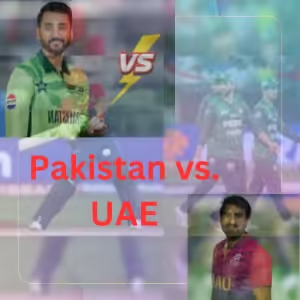
The phrase “Pakistan vs UAE” is gaining traction lately—not just in sports circles, but across diplomatic, cultural, and travel contexts. Based on the latest Google Trends indicators and news coverage, several themes are driving public attention. Here’s a breakdown of what’s popular, what people are curious about, and what it likely means.
Cricket Matches & Sporting Rivalry
A key reason searches spiked recently is the Pakistan-UAE cricket matches. Pakistan’s recent win over the UAE by 31 runs in a T20 tri-series held in Sharjah got significant buzz, especially among cricket fans preparing for the Asia Cup. The Times of India This match added momentum to the rivalry, pushing discussions like “Pakistan batting lineup”, “UAE bowlers”, and “Asia Cup fixtures” to the top of search suggestions.
Bilateral Relations & Historical Ties
Outside sport, people are also interested in the deeper Pakistan–UAE relationship: diplomatic, historical, and military. The two countries have long had defense cooperation (e.g. Pakistani training of UAE forces) and trade relations. Wikipedia Recent queries reflect interest in how those ties continue to evolve: how each country supports expatriate communities, investments, and cooperation in sectors like energy or defence.
Travel, Expat Life, & Remittances
Search volume has risen for topics like “UAE visa for Pakistanis,” “job opportunities in UAE”, “Pakistani expats in UAE”, etc. Many people are looking up how things like immigration rules, living costs, work permits are trending. This is driven both by changing policies in the UAE and the large Pakistani diaspora there.
Some of the trend is also cultural: festivals, business events, cricket-related social media buzz, influencers, etc. When teams meet in high-profile tournaments, there are more searches for “Pakistani fans in UAE”, “watch/live stream Pakistan vs UAE match”, and “celebrity reactions.”
Do you have an interest in US Star? Barron Trump read full
What Does This Tell Us?
- The intersection of sport and national identity remains a powerful driver for searches—cricket is often the spark.
- Diplomatic relations still matter, especially when they impact ordinary people (visas, employment, remittances).
- There’s increased curiosity about what it’s like living/working in the UAE as a Pakistani national.
- Media and social stories amplify the interest: match results, controversies, announcements, etc. feed into the search patterns.
Last but not least
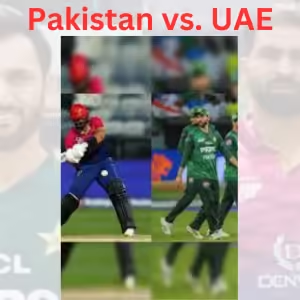
The rising interest in “Pakistan vs UAE” clearly shows how a single phrase can reflect multiple layers—cricket rivalries, diplomatic relations, expat life, and cultural ties. While sporting events like the recent T20 tri-series spark instant spikes in searches, long-term curiosity remains around visas, job opportunities, and the shared history between the two nations.
FAQ
Why are “Pakistan vs UAE” searches increasing now?
Is it more about cricket or diplomacy/travel?
Both, though cricket seems to generate sharper peaks (match days, score updates etc.), while travel / relations cause steadier background interest.
What are people most curious about?
Visa rules & immigration for Pakistanis in UAE
Expat life (costs, work)
Historical ties / bilateral cooperation