

Hurricanes and tropical storms 2025
Table of Contents
Hurricanes and tropical storms are among nature’s most intense and awe-inspiring phenomena, captivating the public with both their power and the challenges they present each year. With climate trends pushing these storms into headlines more often, understanding what they are and how they impact our world is more crucial than ever.
What are Hurricanes and Tropical Storms?
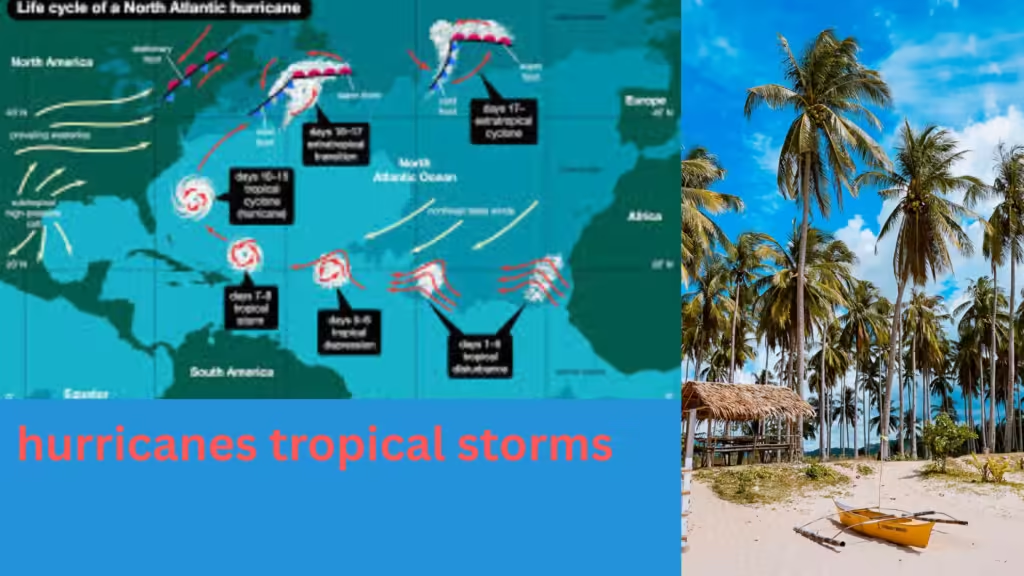
Hurricanes and tropical storms are types of tropical cyclones—rapidly rotating storm systems that form over warm ocean waters near the equator. When wind speeds reach at least 39 mph (63 km/h), the system is classified as a tropical storm. If winds escalate to 74 mph (119 km/h) or more, it becomes a hurricane
regional name differences hurricanes and tropical storms 2025
Despite regional name differences of Hurricanes and tropical storms 2025—“hurricanes” in the Atlantic and eastern Pacific, “typhoons” in the western Pacific, or just “cyclones” elsewhere—the structure and risks are much the same everywhere. These storms pull moisture and energy from warm ocean waters, then unleash fierce winds, heavy rains, and sometimes catastrophic storm surges as they move toward coastal areas.
san Diego weather conditions can be related or not
Lifecycle and Hazards of Hurricanes and tropical storms 2025
A tropical cyclone typically progresses from a tropical depression to a tropical storm and finally to a hurricane if conditions allow. These storms can last from a single day to several weeks, unleashing multiple hazards in their path.
Key hazards include of Hurricanes and tropical storms 2025
- Extremely strong winds capable of destroying homes and infrastructure
- Flash flooding from torrential rainfall
- Coastal storm surges that inundate land
- Spawned tornadoes and dangerous rip currents
Over the past 50 years, nearly 2,000 disasters and hundreds of thousands of deaths have been linked to these storms, as well as widespread financial losses.
Over the past 50 years, nearly 2,000 disasters and hundreds of thousands of deaths have been linked to these storms, as well as widespread financial losses.
LATEST BY “Hurricanes and tropical storms 2025”
On Sunday, Oct. 5, experts were tracking a broad area of low pressure associated with a tropical wave, referred to as Invest 95L (AL95) by the National Hurricane Center in Miami, Florida, and a weak area of low pressure over the north-central Gulf producing showers and thunderstorms near the coasts of Louisiana, Mississippi, and Alabama.
Days after Hurricane Humberto and Hurricane Imelda fizzled out over the open Atlantic, the National Hurricane Center kept track of an area of low pressure and a tropical wave off the coast of Africa.
After a brief respite, the Atlantic is about to heat back up, with a new tropical storm expected to form soon. Meanwhile, the Eastern Pacific is still active and may see its seventeenth storm form later this week.
Why Are They Trending?
Recent years have seen more frequent and intense hurricanes, partially attributed to warming ocean temperatures and climate change, which provide extra fuel for these storms. Events such as floods in Texas and devastating hurricanes in regions like Florida and the Caribbean frequently dominate headlines, highlighting the destructive potential of these storms.
Steering winds may cause the storm to pass close to the northeastern Caribbean islands late this week or this upcoming weekend,” said Pydynowski. “This would bring a glancing blow of rain and wind.
Geographic and Seasonal Patterns
Tropical storms and hurricanes form in ocean regions between 5° and 30° latitude—both north and south of the equator. Warm waters (typically above 26.5°C or 80°F) are essential for their formation. The North Atlantic hurricane season runs from June 1 to November 30, but storms can occasionally develop outside this timeframe.
Human Impact and Preparedness
The devastation from hurricanes is not just in property damage—flooding, displacement, and loss of life all take a deep human toll. Communities often struggle for years to fully recover. Increasing urban development along coasts and population growth in these regions put more people and assets in harm’s way each year.
Early warning systems, community readiness plans, and global cooperation are vital in minimizing losses and saving lives.
FAQ
What is the difference between a hurricane and a tropical storm?
What causes these storms to form?
What is the Saffir-Simpson scale?
Are hurricanes increasing because of climate change?
What hazards should people worry about?
Which part of Florida is safest from hurricanes?
What month is worst for hurricanes in Florida?
Mid-August through September: This is the peak of hurricane season, with the most intense and frequent storms.
LAST BUT NOT LEAST
Understanding hurricanes and tropical storms is more important than ever in staying safe and protecting communities, especially as these storms continue to make headlines in a changing world.